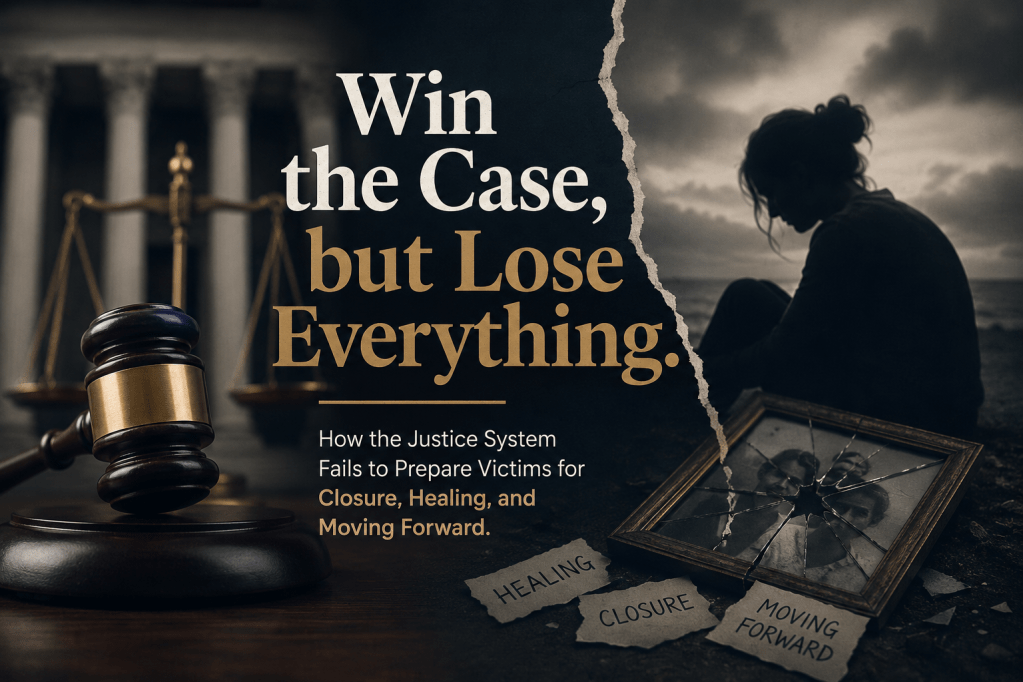
The criminal justice system in the United States was established upon foundational principles intended to preserve order, protect society, and administer justice impartially. The concept of justice itself is rooted in the Latin jus and juris, meaning “law” or “right,” reflecting the enduring philosophical belief that law exists not merely as a mechanism of punishment, but as an instrument through which society attempts to render what is due to each individual. American criminal jurisprudence evolved through a synthesis of English Common Law traditions, Blackstonean legal philosophy, constitutional principles, and broader Judeo-Christian ethical concepts emphasizing accountability, proportionality, and human dignity.
At its theoretical core, the criminal justice system endeavors to achieve several simultaneous objectives: safeguarding public safety, ensuring accountability for unlawful conduct, preserving procedural fairness, and providing victims with a sense that justice has been meaningfully administered. Yet one of the more difficult realities confronting victim advocates and criminal justice professionals alike is the recognition that legal justice and emotional restoration are not synonymous. A lawful outcome, even when procedurally sound and morally appropriate, may still fail to alleviate the profound psychological, relational, financial, and existential consequences experienced by victims of crime.
This distinction is particularly important when working with primary and secondary victims of violent or traumatic offenses. Victim advocacy often requires navigating the delicate intersection between legal process and human suffering. Managing expectations compassionately and realistically becomes essential, as no judicial outcome can fully restore what trauma has altered, repair what has been broken, or return what has been irretrievably lost. For many survivors, the pursuit of justice becomes intertwined with grief, identity disruption, distrust, and unresolved trauma responses that persist long after formal legal proceedings conclude.
What remains particularly compelling from both a criminological and sociological perspective is the degree of overlap frequently observed between victim and offender populations. Individuals impacted by crime often exhibit historical patterns of trauma exposure, post-traumatic stress, substance dependency, economic instability, adverse childhood experiences, relational dysfunction, and chronic psychological distress. Ironically, many of these same factors are routinely identified within offender rehabilitation literature as criminogenic risk factors associated with criminal behavior and recidivism.
This parallel presents a significant policy and public safety consideration. Over the past several decades, the criminal justice system has invested substantial intellectual, financial, and institutional resources into offender rehabilitation, evidence-based correctional programming, behavioral intervention models, and reentry initiatives. While these efforts remain important, comparatively less systemic emphasis has historically been placed on comprehensive victim stabilization, trauma recovery, and long-term psychosocial support for survivors of crime.
This observation should not be interpreted as a criticism of rehabilitative frameworks, but rather as an invitation to reconsider whether the system’s preventative objectives are being pursued comprehensively enough. If unresolved trauma, instability, and victimization contribute to future cycles of criminal conduct, then strengthening victim-centered interventions may represent not only a moral imperative, but also a meaningful violence prevention strategy.
A trauma-informed and prevention-oriented justice model must recognize that victims are not simply participants in legal proceedings; they are individuals whose experiences may fundamentally alter neurological functioning, emotional regulation, relational stability, economic security, and long-term wellbeing. Effective victim advocacy therefore extends beyond procedural guidance or crisis intervention. It requires intellectual humility, psychological insight, ethical communication, and a sustained commitment to restoring dignity, agency, and stability to individuals navigating profound adversity.
The legitimacy of any justice system is measured not solely by its capacity to punish wrongdoing, but by its willingness to meaningfully acknowledge human harm and invest in healing those most directly impacted by it. True justice requires more than adjudication; it requires restoration, accountability, and an unwavering commitment to the humanity of both victims and the communities in which they live.
The accused are protected by the Constitution. Victims deserve more than pamphlets and promises. If victims matter, their rights should be Constitutional.
-Ann C. Tepoorten


Leave a comment